
Why does a letter come back?
The post office usually sticks the reason onto the envelope. The most common notes:
- "Recipient unknown": The name is not on the letterbox — with authorities and companies often a department or P.O. box problem.
- "Moved": The recipient has moved without a forwarding order — or the order has expired.
- "Address incomplete/incorrect": A typo in the street, postcode or house number.
- "Acceptance refused": The recipient deliberately did not accept the letter — legally this can still count as receipt.
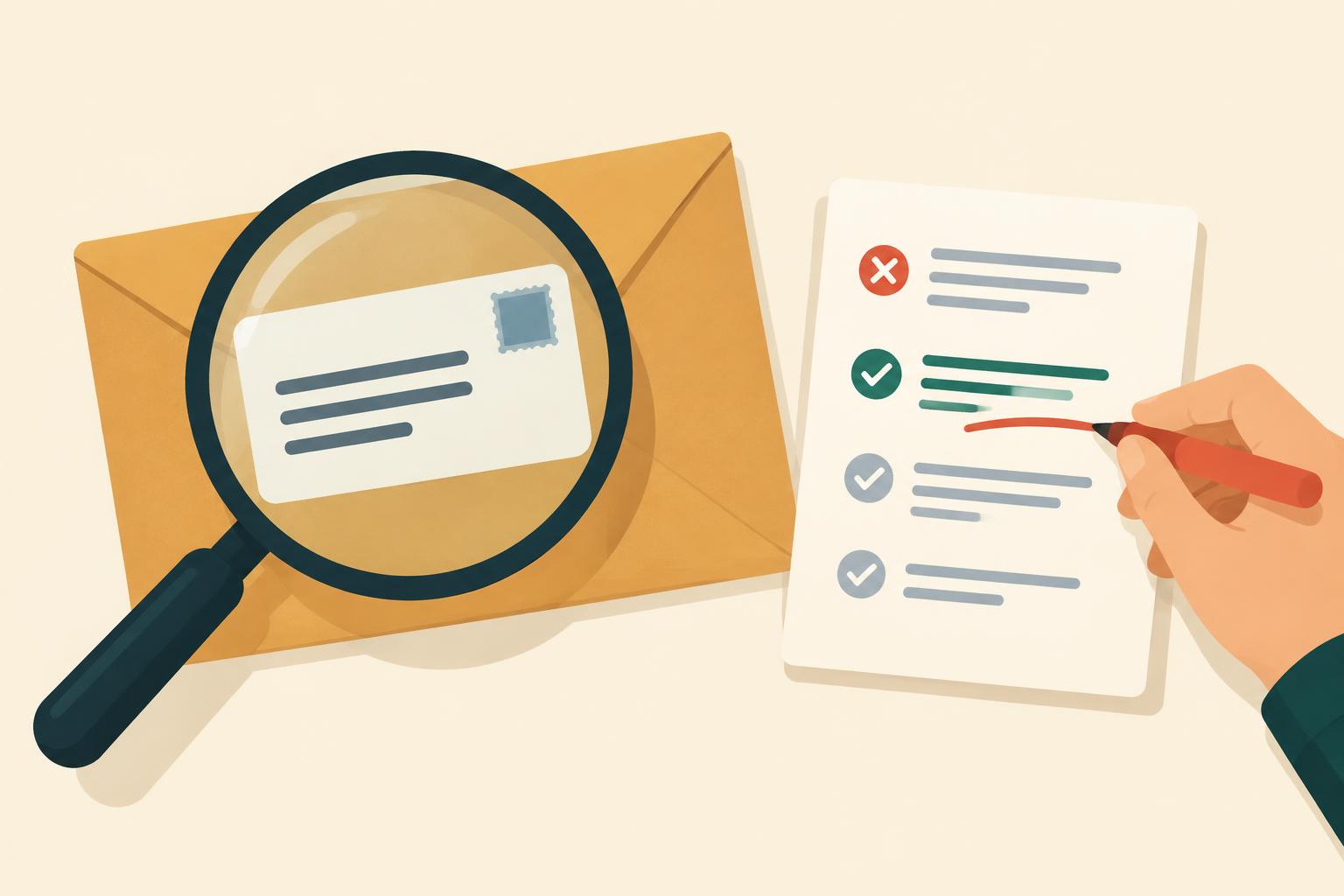
Step by step: what now?
- Read the note: The sticker or stamp reveals the reason.
- Check the address: Compare name, street, house number, postcode and city with the source (contract, letterhead, imprint). The guide Addressing an envelope correctly shows the correct format.
- Find the new address: For "moved", an enquiry at the registration office or a look at the website's imprint helps.
- Re-address and resend: Take a new envelope, label it correctly, frank it sufficiently — the postage calculator shows the current price.
The special case of deadline letters
If the letter was a cancellation or an objection with a deadline, the return does not count as receipt — the deadline keeps running. Act immediately: corrected address, new dispatch, ideally by Einwurfeinschreiben or online via the letter editor with a dispatch confirmation. More on proof in Proving receipt of letters.
Tip: When you send the letter online, the address is checked before printing — typos are caught immediately.