

The basic layout
On a usual envelope without a window, place the recipient in the lower-right address zone, the sender at the top left and postage at the top right. A domestic German address ends with postcode and town, with street, house number, name and necessary add-ons above.
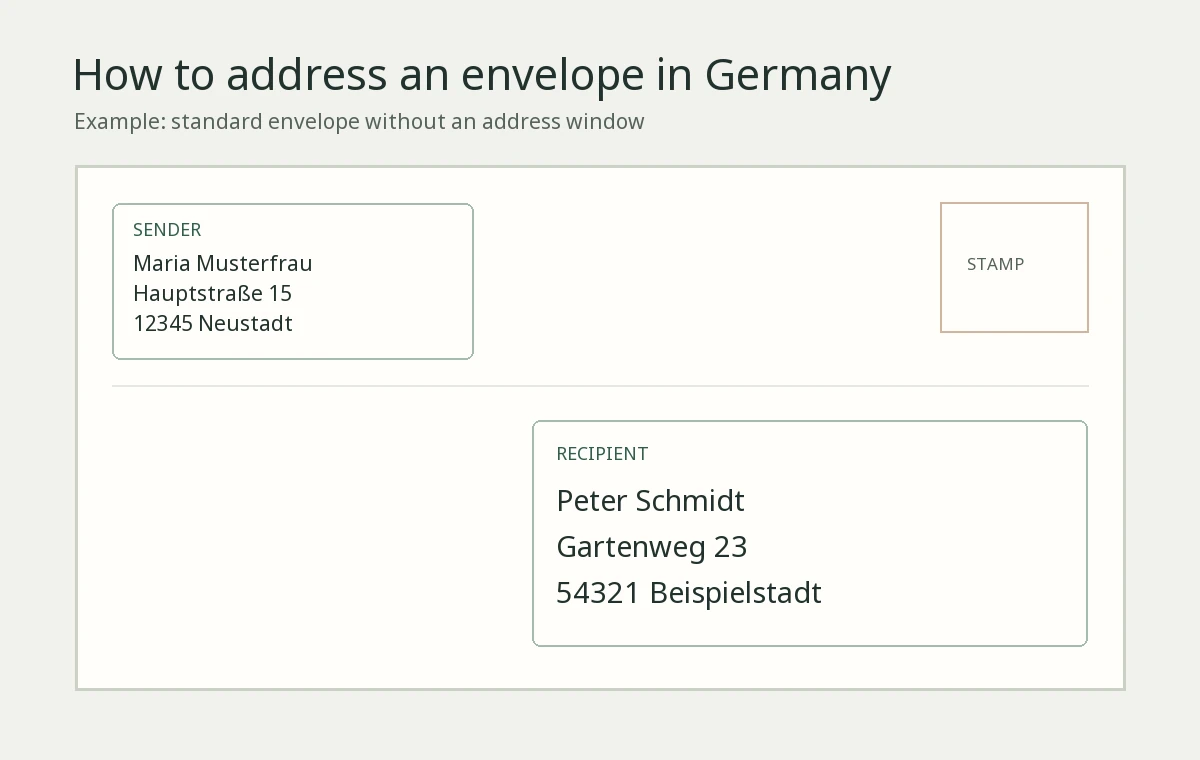
| Line | Content | Example |
|---|---|---|
| 1 | Company or salutation + name | Muster GmbH |
| 2 | Contact person or department | For the attention of Ms Sabine Klein |
| 3 | Street and house number or PO box | Lindenstraße 12a |
| 4 | Postcode and town | 50667 Köln |
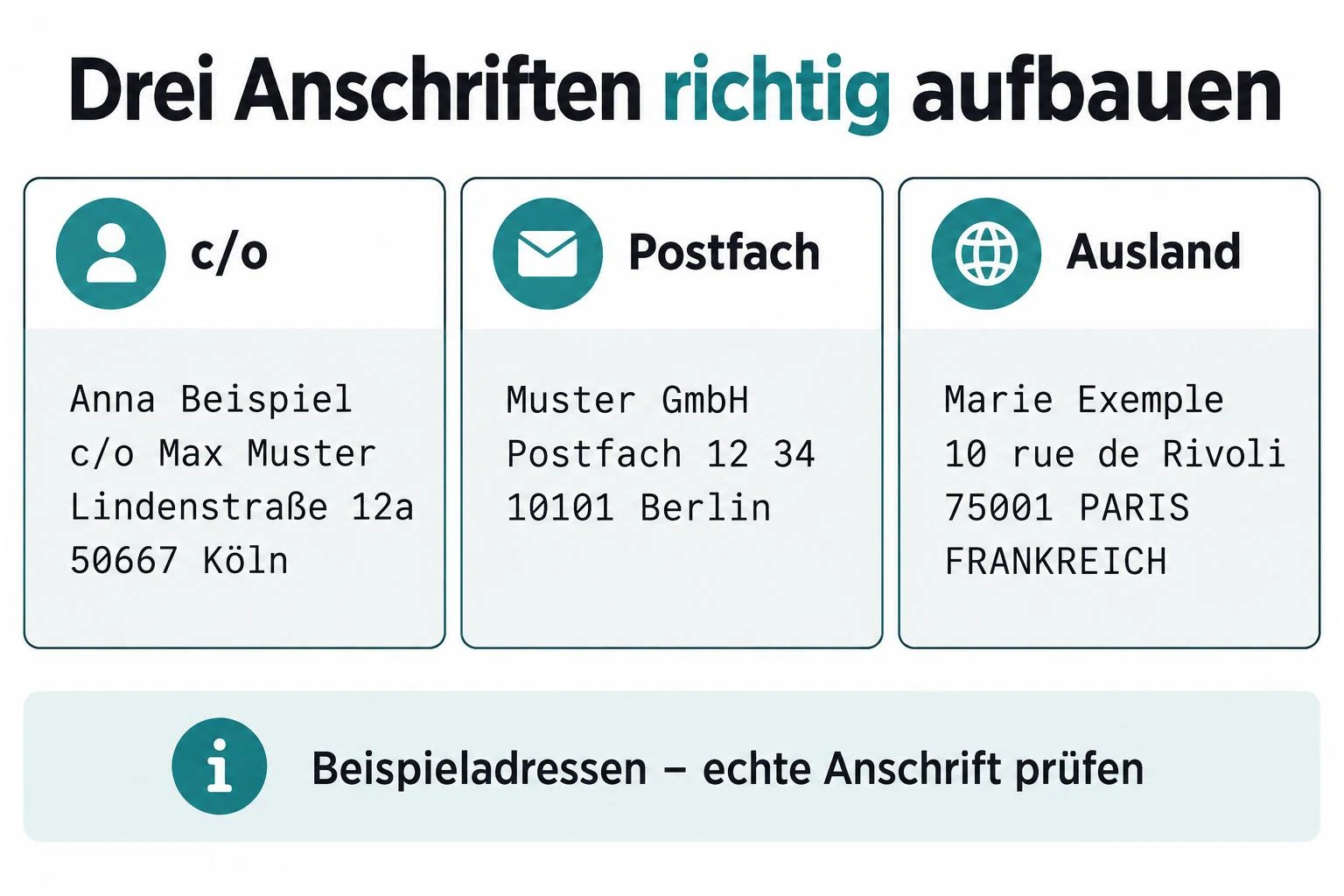
Placing add-ons correctly
- "z. Hd." (for the attention of) goes above the street line, not below it — otherwise the sorting machine reads it as part of the address.
- PO box instead of street: giving both at once is a common mistake. Pick one delivery method; the PO box postcode often differs from the street-address postcode.
- "Personal" or "Confidential" marks confidential correspondence; it is not a postal identity or delivery guarantee.
- c/o names the person under whose name the letterbox is labelled. Leave it out, and the item may come back as undeliverable.
International post
For items abroad, write the address in the destination country's format and put the country in capital letters on the last line — ideally in German, English or French. The postcode stays in the country's own format; prefixing a country code such as "F-" is now considered outdated.
Rule of thumb: everything above the country line is written for the destination country; the country line itself is written for the German postal service.
Common mistakes that cost time
- Leaving out house-number suffixes such as "a" or "1/3".
- An address that is crooked, too small, or too close to the edge — the reading zone needs clear space.
- Using an old address from your address book instead of the latest invoice.
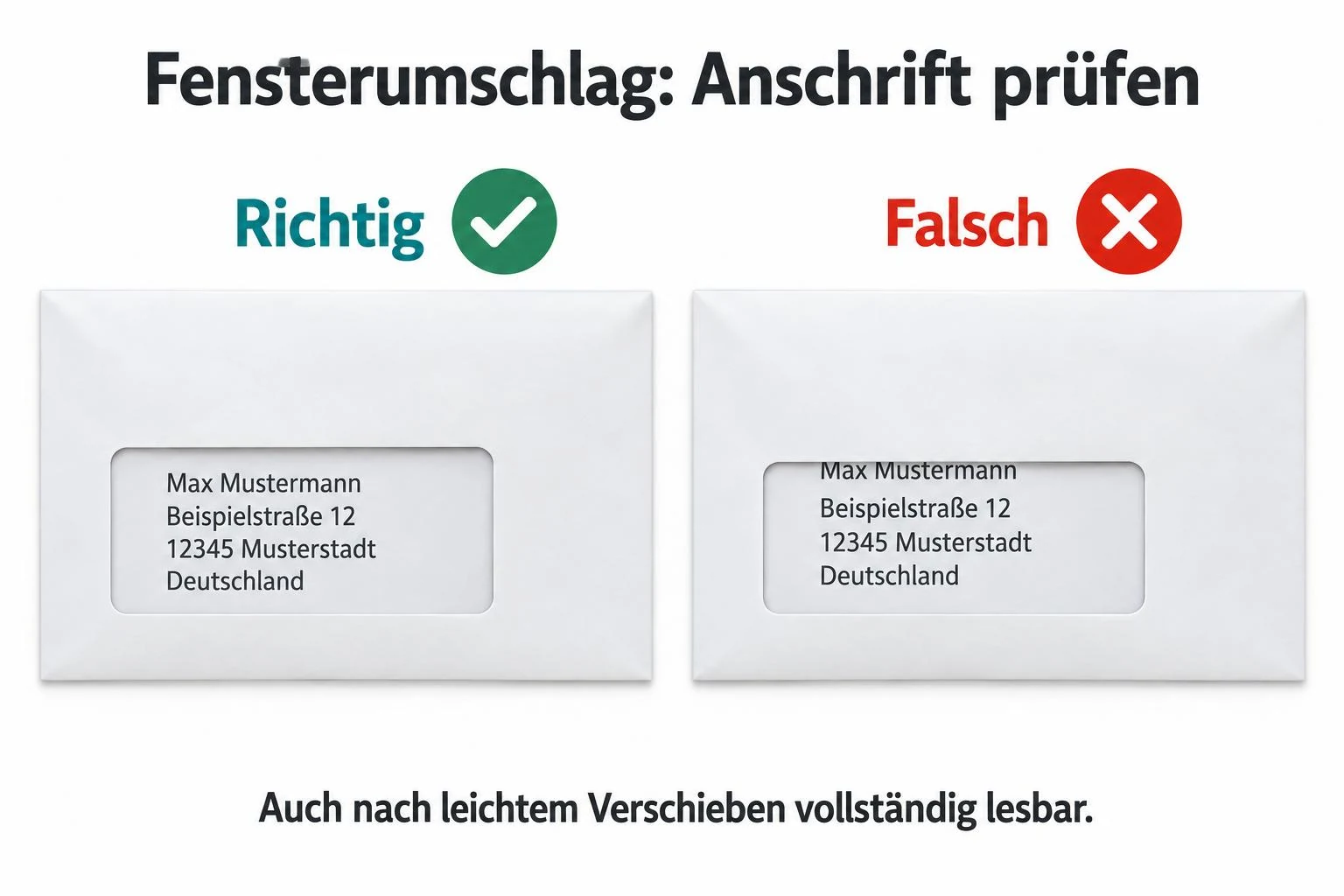
- Folding a window envelope incorrectly, so part of the address is hidden.
Use the online editor to review the address and letter preview. Correct placement helps preparation but does not replace checking that the recipient’s address is current and complete.
c/o, attention lines and PO boxes: the differences
c/o is useful when the recipient receives mail through somebody else’s letterbox. z. Hd. means “for the attention of” a contact at a company; it does not replace the company name. For a PO box, use the specified box number and its postcode instead of combining it with a street address.
Fictional c/o example:
Anna Beispiel
c/o Max Muster
Lindenstraße 12a
50667 Köln
Should domestic mail include “Deutschland”?
No country line is needed within Germany. For international mail, put the destination country in capital letters on the final line. Format the other lines according to the destination country and verify the address with the recipient.
How do I check a window envelope?
Fold and insert the letter, then move it gently towards the envelope edges. The name, street, house number, postcode and town must remain fully visible. Additional address lines must not disappear behind the window. For business correspondence, see our DIN 5008 guide.
Four checks before sending
- Use a current, reliable source for the address.
- Check house-number suffixes and the name on the letterbox.
- Use straight, legible lines and clear space around the address.
- Check format, weight and postage separately.
The letter editor displays the entered address in the preview. A correctly positioned address can still be incorrect or outdated, so check the details yourself. Further guidance is available from Deutsche Post.