
The difference in one table
| Standard letter | Registered (mailbox delivery) | Registered (hand delivery) | |
|---|---|---|---|
| Price (on top of postage) | — | + €2.35 | + €2.65 |
| Tracking | No | Yes, until mailbox delivery | Yes, until handover |
| Posting receipt | No | Yes | Yes |
| Recipient signs | No | No (only delivery documented) | Yes, with signature |
| Liability if lost | None | Limited (valuables up to €500, cash up to €100) | Limited (same) |
Prices as of 2026, without guarantee — check current rates in the postage calculator.
What registered mail proves — and what it doesn't
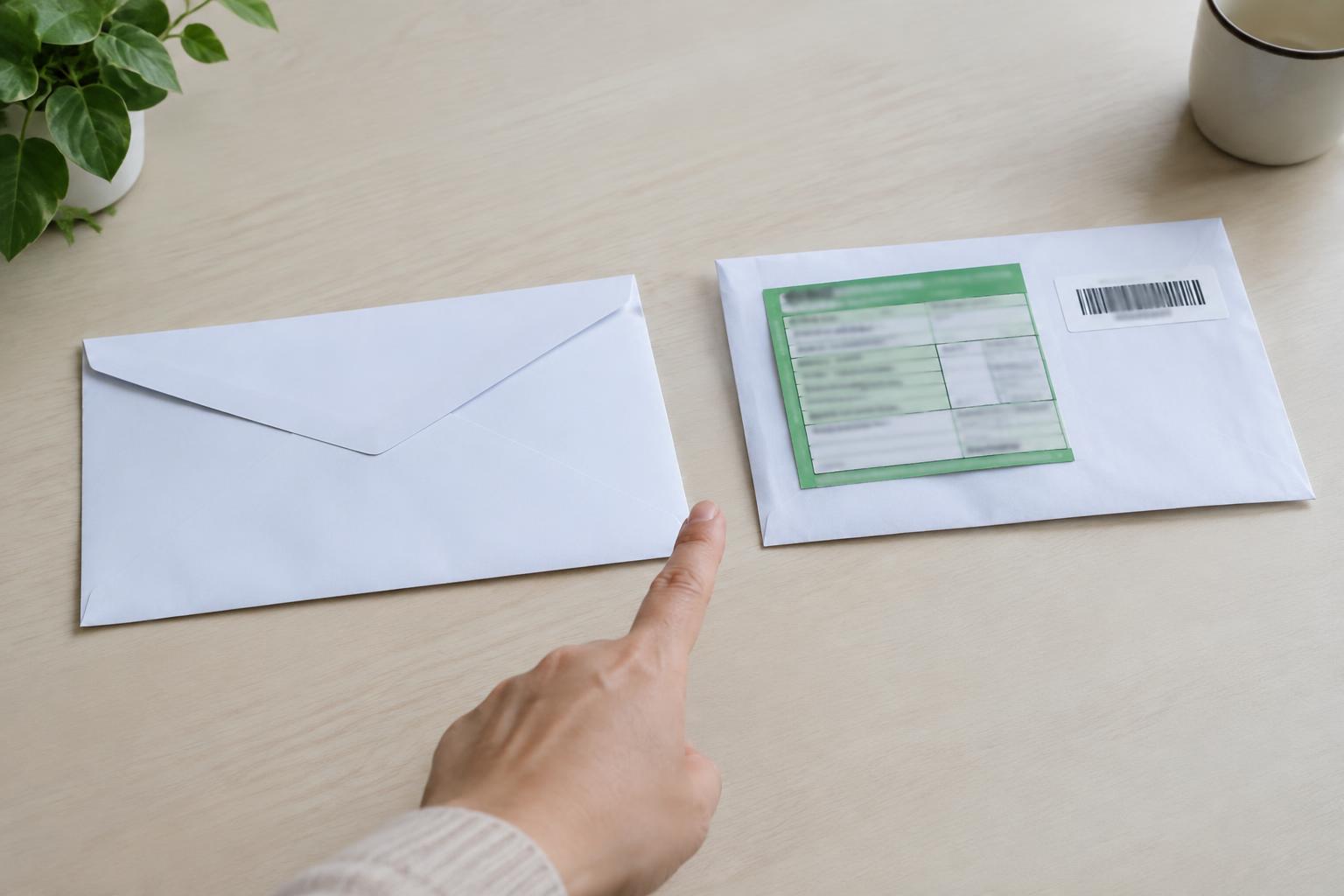
The posting receipt proves that you handed in a letter to that address — not what was inside. With mailbox-delivery registered mail, case law (BGH VIII ZR 95/11) treats the letter as received the day after it is dropped into the mailbox, unless the recipient shows otherwise. Hand-delivery registered mail additionally documents the signature of the recipient or an authorised person. Neither variant proves the content — so keep a copy of the letter, ideally with a witness or photo documentation for important declarations.
When a standard letter is enough
- Everyday correspondence, congratulations, non-binding enquiries.
- Declarations without a deadline or need for proof.
- Bulk mail where the surcharge outweighs the benefit.
When to choose registered mail
- Deadline-bound declarations: cancellations, objections, withdrawals — provable receipt matters here. Details in the guide proving delivery of a letter.
- Important original documents: certificates, contracts, keys (consider insured mail).
- Unreliable recipients: when you expect receipt to be disputed.

Practical tip
Many online sending services offer registered mail as an add-on — no trip to the post office needed. How online sending works in general is explained in sending a letter online; the variants in detail in using registered mail correctly.