
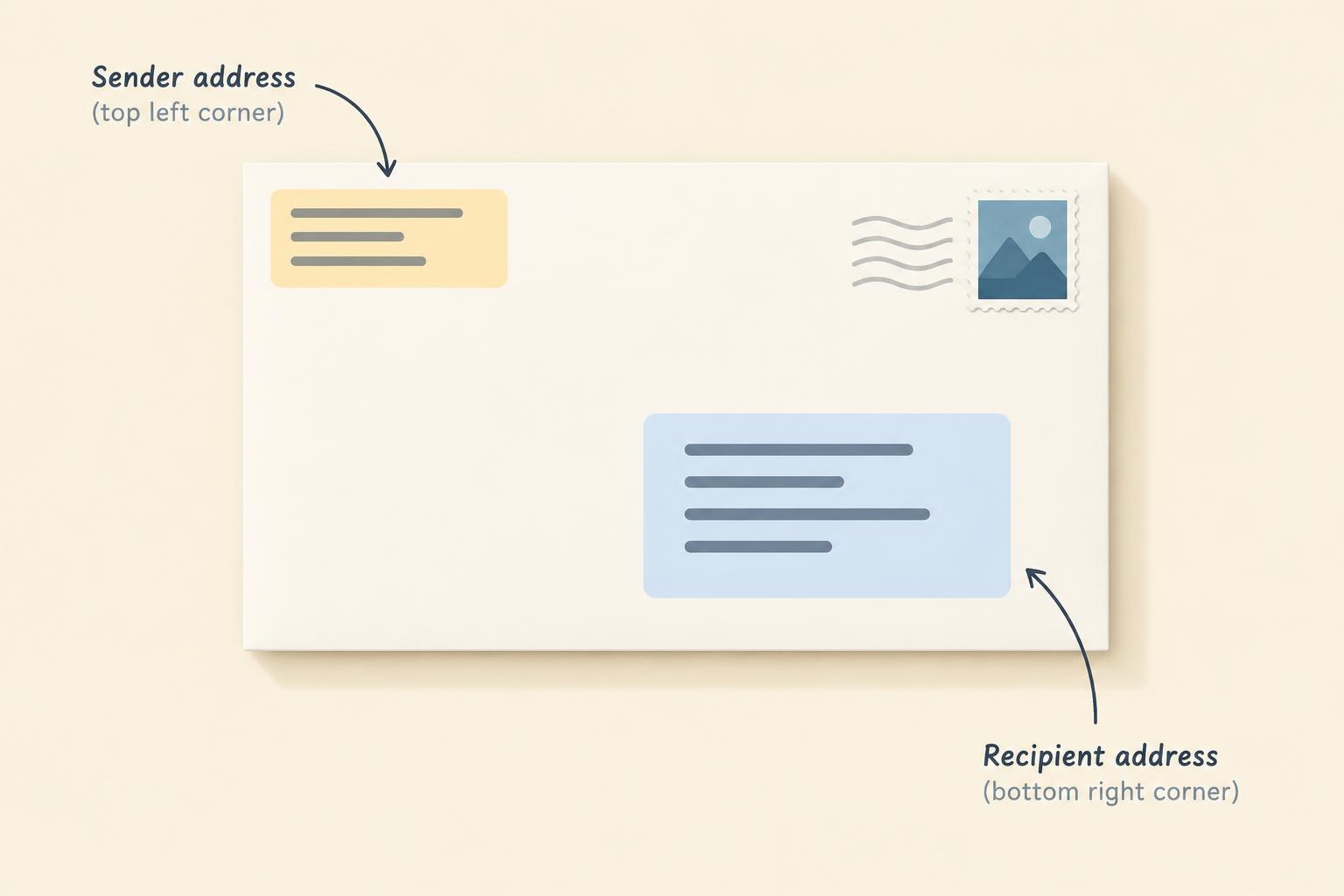
The short answer
The sender address goes on the front, top left — or on the back of the envelope, usually along the top edge of the flap. Both are accepted by Deutsche Post. The only rule: the sender must not sit in the recipient address area, so the sorting machines don't mix up the addresses.
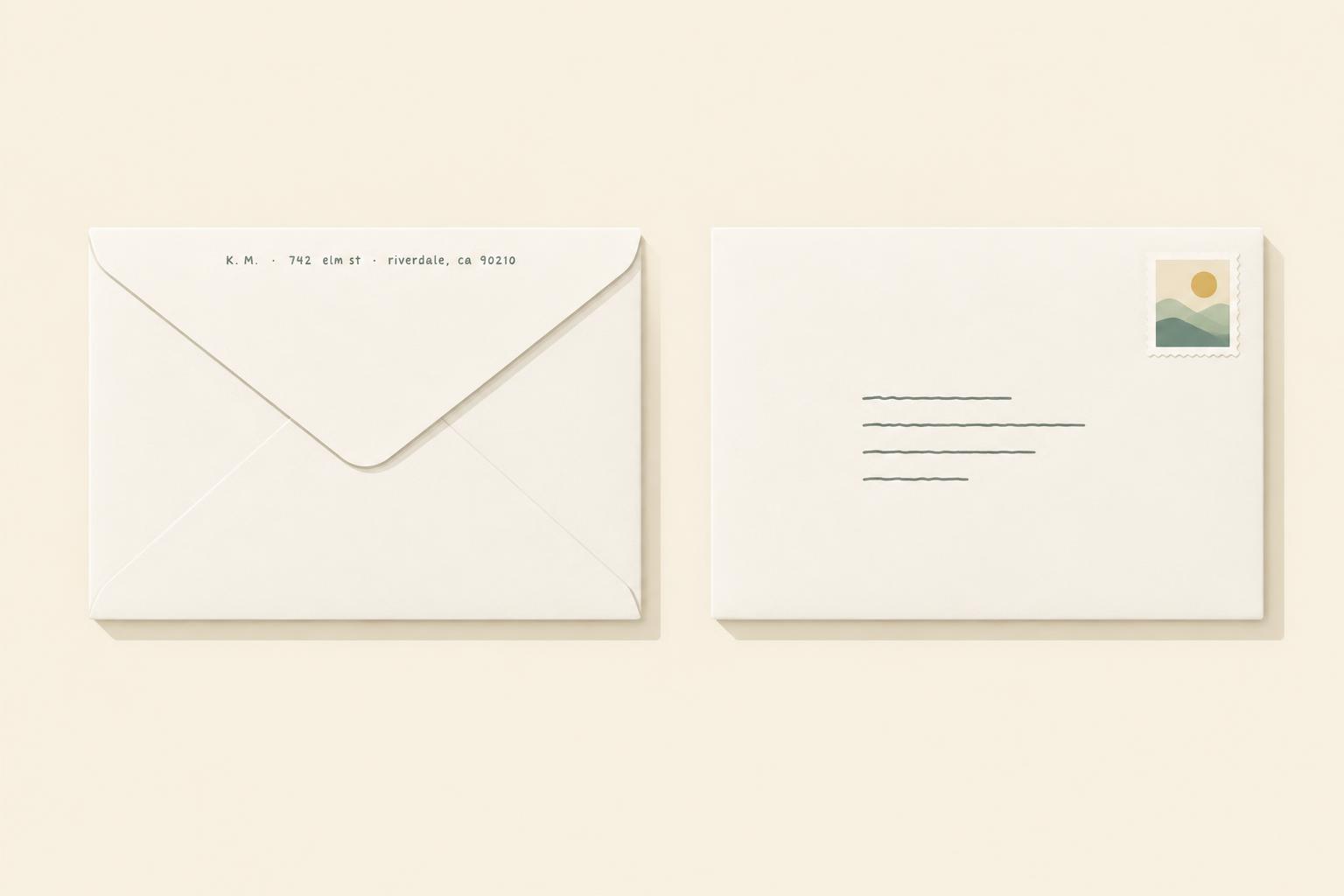
Why the sender address matters
- Returns: If the recipient is unknown or has moved, the letter only comes back to you if a sender address is on it. Without one it ends up in the post's investigation office.
- Credibility: Authorities and companies open letters with a recognisable sender more readily — anonymous letters look suspicious.
- Traceability: For deadline letters the sender address helps with assignment if the envelope serves as evidence.
How to write the sender address
- First and last name (or company name),
- Street and house number,
- Postcode and city.
Small, one line per item — on the front clearly smaller than the recipient address. With window envelopes the sender usually appears as a small line above the recipient address in the letter itself, visible through the window.
The complete labelling at a glance
All zones of the envelope — including the stamp and markings like "Einschreiben" — are shown in the illustrated guide Addressing an envelope correctly. If you send the letter online via the letter editor, placement takes care of itself: sender and recipient are set to the standard automatically.