The differences at a glance
| Feature | Großbrief | Maxibrief |
|---|---|---|
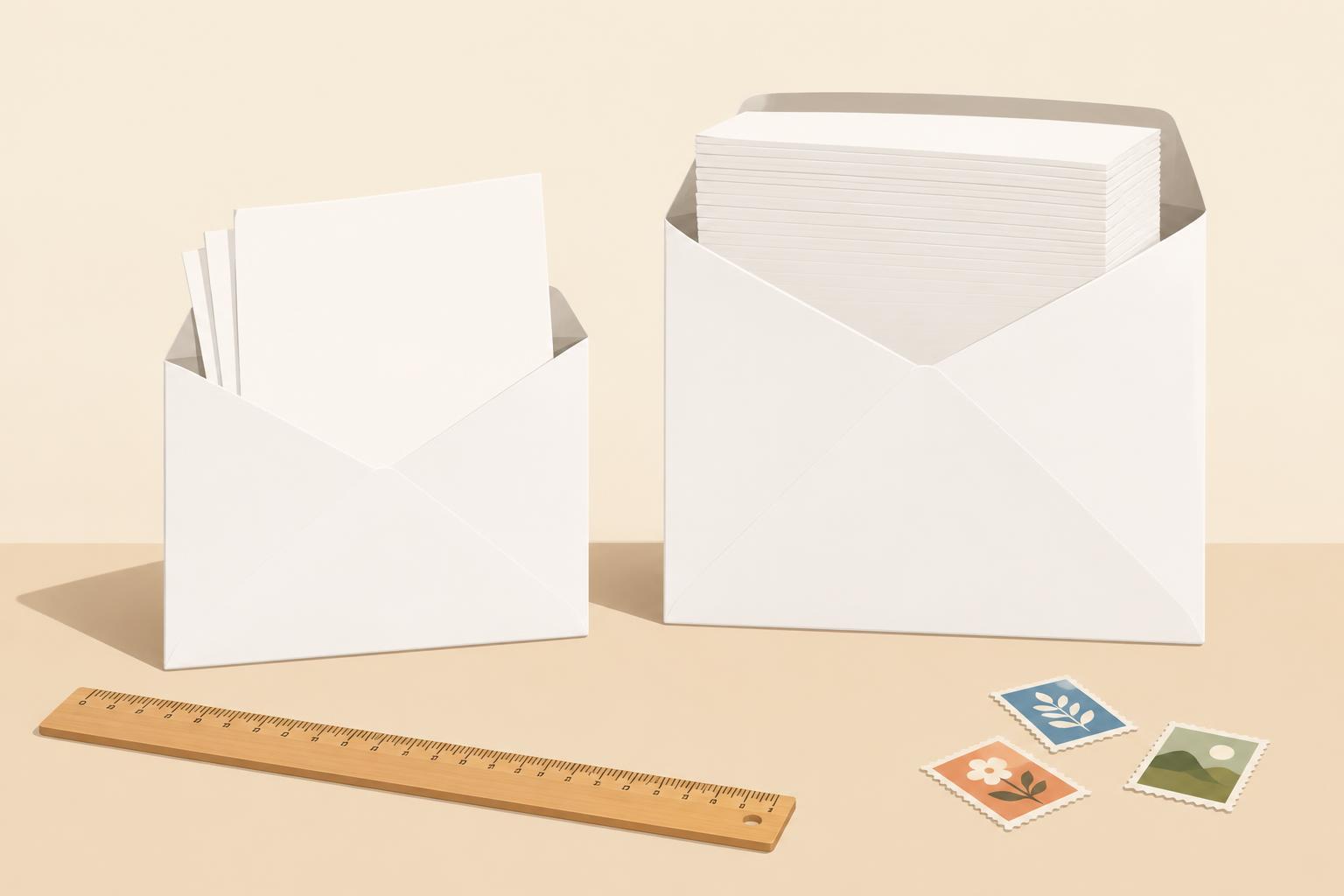
| Maximum weight | up to 500 g | up to 1,000 g |
| Maximum size | 353 × 250 × 20 mm | 353 × 250 × 50 mm |
| Typical contents | application folder, contract with annexes | thick documents, catalogues, manuscripts |
Both formats hold unfolded A4 sheets in a C4 envelope. Exact prices change with Deutsche Post's rate adjustments — the postage calculator shows the current amount for your letter.
How many pages fit inside?
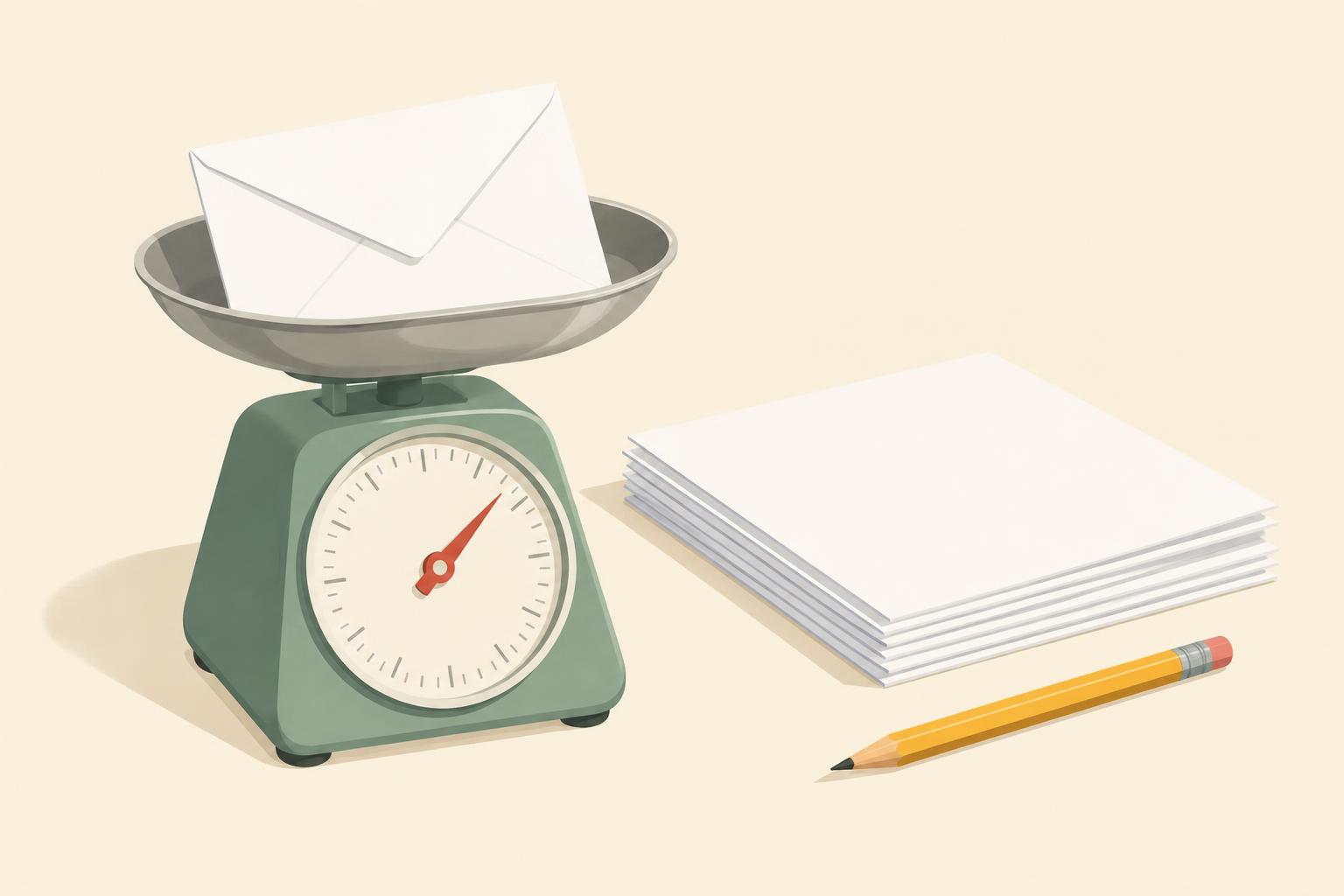
An A4 sheet at 80 g/m² weighs about 5 grams. That gives rough guide values (including the envelope):
- Großbrief (up to 500 g): around 90 sheets — in practice limited by the maximum thickness of 2 cm.
- Maxibrief (up to 1,000 g): around 180 sheets — in practice limited by the maximum thickness of 5 cm.
Heavier paper (100 g/m² or more), clipboards or plastic sleeves increase the weight noticeably. When in doubt, always weigh it.
Rule of thumb for choosing
- Under 2 cm thick and under 500 g? → Großbrief.
- Thicker than 2 cm or heavier than 500 g? → Maxibrief.
- Over 1 kg or bulky? → Then it becomes a small parcel or package.
Avoid under-franking
Too little postage is expensive: the recipient has to pay a surcharge or the letter comes back — a real problem for a job application or a deadline letter. Three tips:
- Pack first, then weigh: Envelope and annexes belong on the scale too.
- Measure the thickness: A Großbrief that is too thick is treated as a more expensive category.
- Rather go one tier up: The surcharge is smaller than the risk of a return.
Less effort: in the letter editor you upload your document — printing, enveloping and correct franking are handled automatically. More on formats and prices in Postage and letter types in Germany.